
LEAK DETECTION, COMMERCE CITY, CO
Leak Detection in Commerce City, CO
★ 4.9-star service • Licensed & insured • Upfront pricing
Water leaks hide. They run inside walls, under slabs, and beneath yards for weeks before you notice.
By then the damage is done: warped floors, mold colonies, and water bills that doubled for no reason.
First Call Plumbing finds hidden leaks across Commerce City with acoustic listening gear and thermal imaging, then pinpoints the exact spot so repairs stay small.
We answer 24/7. Call (720) 712-9692 any time.
WARNING SIGNS
What Are the Signs of a Hidden Water Leak?
A sudden spike in your water bill, the sound of running water when everything is off, warm spots on the floor, musty odors, and mold growth are the classic signs. One sign deserves attention.
Two or more together mean you likely have an active hidden leak that is getting worse every day.
Here is what to watch for, and what each sign usually means:
- Water bill spikes. Your usage jumps 30, 50, even 100 percent with no change in habits. A running toilet wastes some water. A hidden supply leak wastes thousands of gallons silently. Compare this month’s bill to the same month last year.
- Running water sounds. You hear hissing or rushing inside walls or floors when every faucet and appliance is off. That is pressurized water escaping a pipe. Turn everything off, stand quietly, and listen.
- Warm spots on floors. A hot-water line leaking under a slab heats the concrete above it. Walk barefoot across tile or wood floors. A distinct warm patch that was not there before points straight at a slab leak.
- Musty smells and visible mold. Mold needs sustained moisture. A musty closet, a dark stain spreading on drywall, or mold along baseboards means water has been feeding it for a while. The leak is nearby.
- Low water pressure. Pressure drops across the whole house when a supply line leaks badly enough. If pressure fell gradually over weeks, suspect a growing leak rather than a municipal issue.
- Cracks in walls or flooring. Water swells wood, buckles laminate, and stains ceilings. In slab homes, a leak can even lift or crack sections of flooring as soil shifts beneath.
- Wet spots in the yard. A service line leak between the meter and your house surfaces as a perpetually soggy patch, even in dry weather. Grass there grows faster and greener than the rest of the lawn.
- Your water meter runs with everything off. This is the homeowner’s definitive test. Turn off every faucet and appliance, then watch the meter for 15 minutes. If the dial or digital readout moves, water is leaving your system somewhere it should not.
Why Commerce City is different: Our bentonite clay swells when wet and shrinks when dry, stressing every buried pipe joint year after year.
Homes on slab foundations feel it most: soil movement flexes the copper and PEX lines running beneath the concrete until pinholes and cracks form.
Add two decades of mineral-heavy water that thinned pipe walls from the inside, and Commerce City slabs hide more leaks than most Denver suburbs.
SLAB LEAKS
What Is a Slab Leak?
A slab leak is a water line failure beneath your home’s concrete foundation. Supply lines run under or through the slab to reach kitchens and bathrooms.
When one corrodes, cracks, or separates, water floods the soil under your home with no visible source. Warm floor spots, rising water bills, and the sound of running water are the hallmark symptoms.
Slab leaks start small. A pinhole in a copper line mists water into the surrounding soil.
Bentonite clay absorbs it and swells, pushing unevenly against the slab. Over months, that pressure can crack concrete, heave flooring, and open the pinhole wider.
What began as a drip becomes a steady flow eroding soil from under your foundation.
Commerce City’s water history makes this worse. For over 20 years, local water ran extremely hard, around 22 grains per gallon.
Hard water lays mineral scale inside pipes and accelerates corrosion, especially in copper. Even though the supply softened to about 7 grains per gallon in 2021, the damage to older pipes is already done.
Homes plumbed in the 1990s and 2000s are now entering peak slab-leak age.
Catching a slab leak early is everything. A pinhole found this month is a one-day repair. The same leak ignored for a year can mean foundation work, mold remediation, and flooring replacement across multiple rooms.
OUR PROCESS
How Does Professional Leak Detection Work?
We combine four technologies to triangulate the leak without tearing your home apart. Each tool narrows the search. Together they pinpoint the failure within inches, so the repair opens one small area instead of half your house. Here is exactly what happens during a visit:
- We interview you and inspect. We start with your symptoms: bill history, sounds, smells, warm spots. Then we walk the property checking the meter, water heater, visible plumbing, and foundation for clues.
- We run the meter test. With all water off, we watch your meter to confirm an active leak and estimate its size. A fast-spinning meter means a major break. A slow creep means a pinhole.
- We listen with acoustic equipment. Pressurized water escaping a pipe makes a distinct high-frequency hiss. Our ground microphones and listening discs amplify it through floors and walls. We map the loudest points to trace the pipe’s path to the leak.
- We scan with thermal imaging. An infrared camera reveals temperature differences invisible to the eye. A hot-water slab leak glows as a warm bloom on the floor. Cold-water leaks show as cool damp patterns in walls and ceilings.
- We verify with pressure testing and moisture meters. We isolate sections of pipe and pressure-test them to confirm which run is losing pressure. Pin and pinless moisture meters confirm exactly how far water has spread inside walls and floors, which scopes the repair and any drying needed.
The whole process typically takes one to two hours. You get a clear answer: where the leak is, what caused it, and what the repair involves, with a flat-rate quote before any wall or floor is opened.
PRICING
How Much Does Leak Detection Cost?
Professional leak detection usually costs a few hundred dollars, depending on the home’s size, the leak’s difficulty, and how many technologies the job requires. That fee is separate from the repair itself.
National benchmarks (Angi/HomeAdvisor 2026) put standard residential leak detection in the low-to-mid hundreds, with complex slab or multi-story hunts running higher.
Compare that to the alternative. Opening walls on a guess routinely costs more in drywall, paint, and flooring repairs than the detection visit itself, and you still might miss the leak. One precise location found with instruments beats three exploratory holes every time.
Repair costs depend on what we find. A leaking angle stop or supply connector is a quick, inexpensive fix.
A slab leak repair runs higher because it involves concrete work. A burst service line in the yard depends on length and depth.
Your quote is flat-rate and in writing before we start, and most repairs finish the same day we find the leak.
NEXT STEPS
What Happens After You Find the Leak?
Finding it is half the job. Fixing it right is the other half. The repair method depends on the leak’s location and cause, and we walk you through every option with honest trade-offs.
Accessible pipe leaks are the simplest. A leaking joint under a sink, a cracked supply line in a crawlspace, or a failed angle stop gets cut out and replaced, usually within the hour. We use quality fittings rated for the application, not the cheapest part on the truck.
Slab leaks give you two paths. A spot repair breaks through the slab at the marked location, fixes the damaged section, and restores the concrete.
A reroute abandons the under-slab line entirely and runs a new line through walls or attic space, which makes sense when the old piping is failing in multiple spots.
We recommend based on your pipe’s age and condition, and the camera and pressure data back it up.
Yard service line leaks get excavated at the marked spot, repaired with proper bedding for our clay soil, and backfilled and compacted. If the line is deteriorated along its length, replacement beats repeated spot repairs.
After every repair, we pressure-test the system, verify the meter holds steady, and check moisture readings to confirm the area will dry properly. If water sat long enough to risk mold, we tell you plainly and recommend remediation before closing walls.
WHY US
Why First Call Plumbing for Leak Detection?
Leak detection rewards patience and punishes guesswork. Our process is built for precision.
Instruments, not hunches. We own professional acoustic and thermal equipment and use it on every detection call. If a company wants to start cutting before listening, that tells you everything about their process.
Slab and soil expertise. Commerce City’s bentonite clay and hard-water history create leak patterns that look different from textbook cases. We read those patterns because we work this soil every day.
One visit, one answer. Detection and repair quote happen in the same appointment whenever possible. You are not paying for a second trip to learn what the first trip should have told you.
Available around the clock. A burst pipe or major leak cannot wait for business hours. Our emergency line is answered 24/7, and dispatch runs nights, weekends, and holidays.
Plumbing Problem Right Now? Don’t Wait.
REAL RESULTS
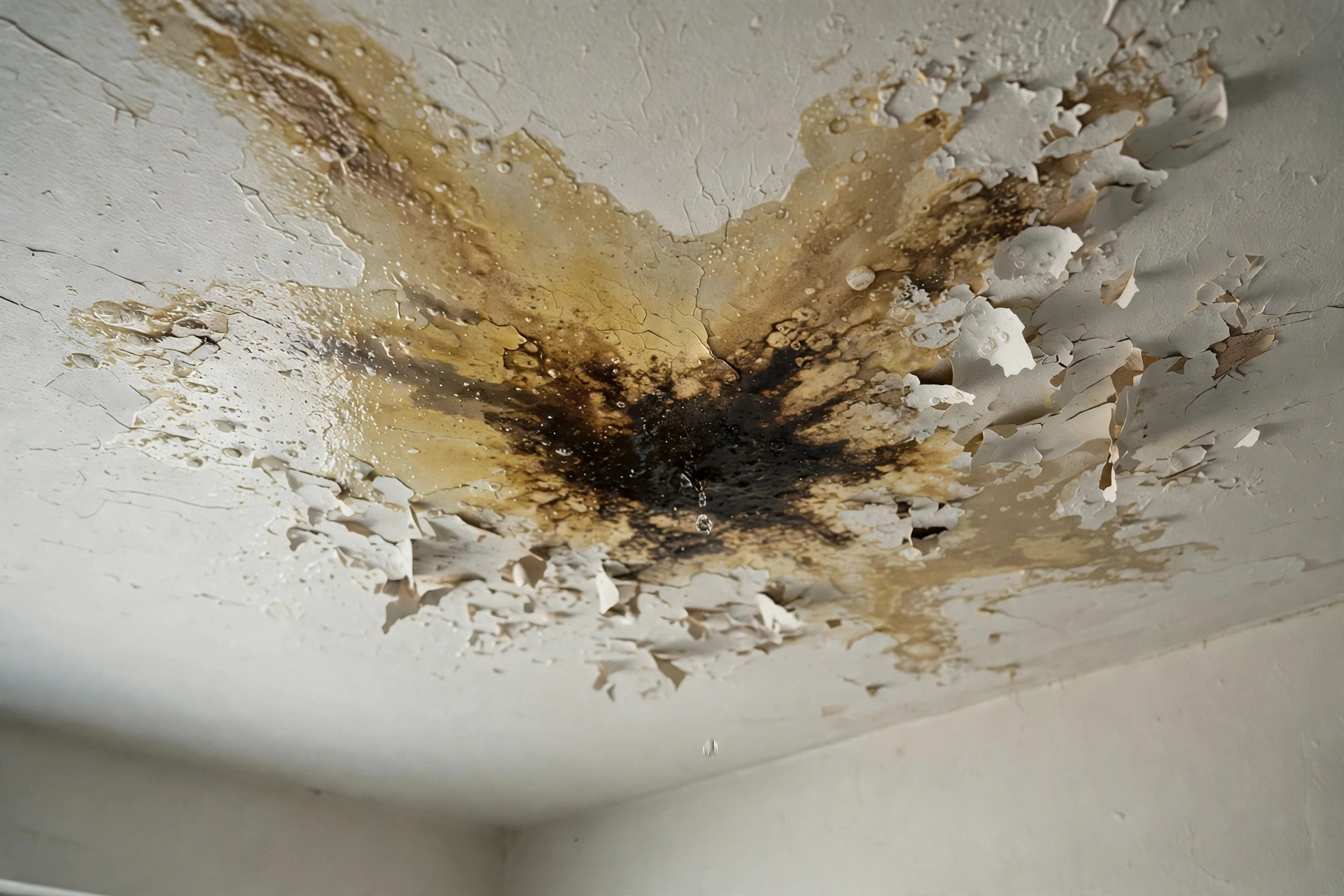
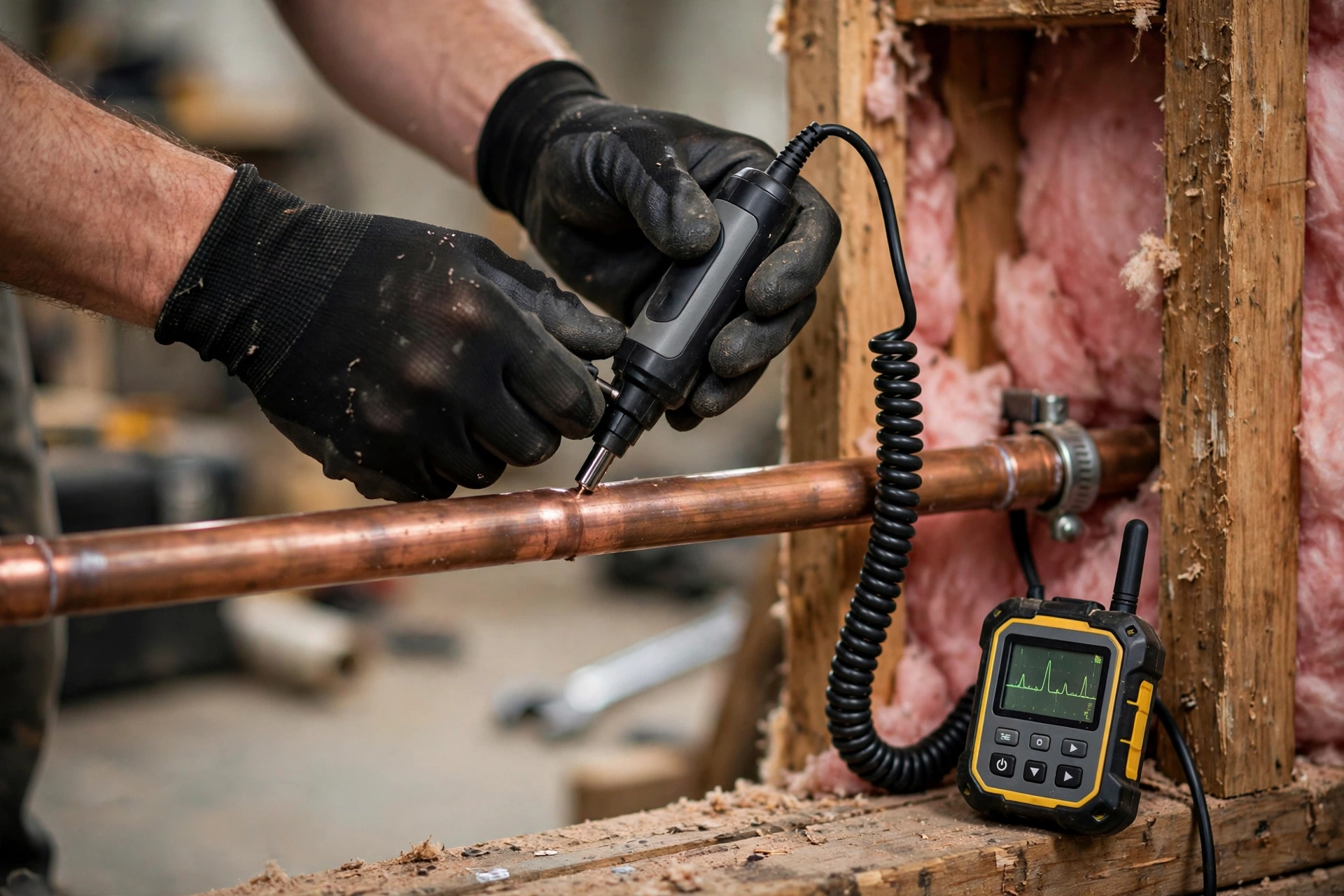
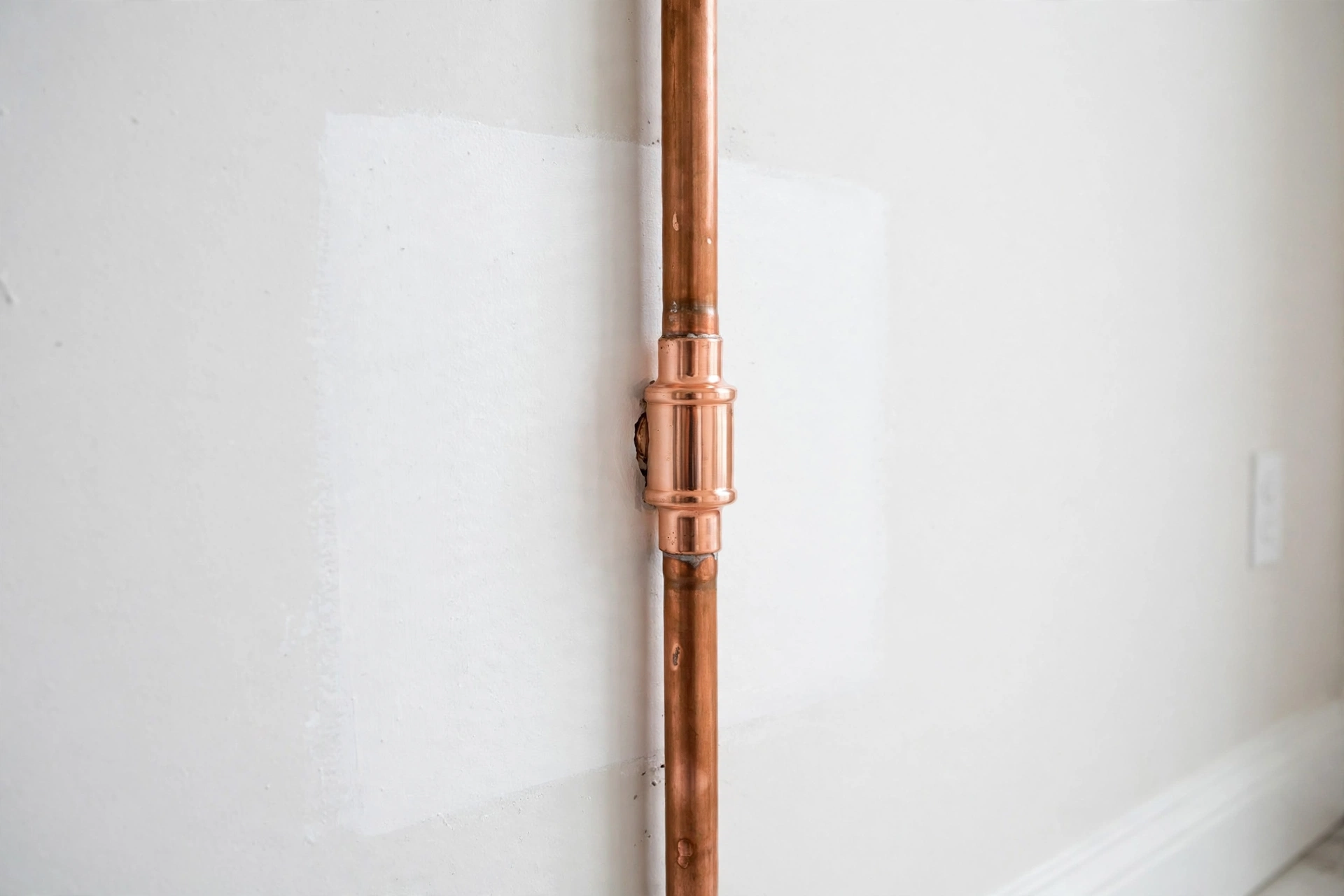
Leak Detection: Before, During & After
Real leak detection jobs from First Call Plumbing. From hidden to found.
One call. Upfront price. A plumber at your door fast.
RELATED SERVICES
You May Also Need
Heater leaking? See water heater repair
Pinhole leaks everywhere? Our repiping services
Active leak? Call our emergency plumber
REVIEWS
What Commerce City Neighbors Say
★★★★★
“Water bill doubled and nobody could find the leak. Their acoustic equipment found it under the slab in twenty minutes. One small cut, fixed, patched. No exploratory demolition like I feared.”
Priya S.. Belle Creek
QUESTIONS?
Frequently Asked Questions
Usually just one small opening at the precise location our instruments identify. That is the entire point of professional detection: we find the leak before cutting, so repairs stay contained. Exploratory demolition without instruments is what destroys rooms, and we do not work that way.
Very accurate in trained hands. Pressurized leaks produce a signature sound that quality listening equipment isolates clearly through concrete and drywall. Combined with thermal imaging and pressure testing, we routinely locate leaks within inches. Difficult cases like tiny pinholes or deep lines take longer but the method still works.
Yes, and it is the most common way hidden leaks announce themselves. A supply leak under a slab or in a wall can waste thousands of gallons a month with zero visible water. Run the meter test: turn everything off for 15 minutes and watch the meter. Movement means a leak, and it is time to call.
It can. Sustained water under a slab erodes supporting soil and lets bentonite clay swell unevenly, which cracks concrete and heaves flooring. The longer a slab leak runs, the more the repair grows beyond plumbing into foundation and flooring work. Early detection keeps it a plumbing job.
Many homeowners policies cover sudden and accidental water damage, though they typically exclude the pipe repair itself and long-term seepage. Document everything with photos, stop the water, and call your insurer promptly. We provide detailed findings and photos from our detection visit to support your claim.