
SEWER LINE REPAIR & REPLACEMENT, COMMERCE CITY, CO
Sewer Line Repair in Commerce City, CO
★ 4.9-star service • Licensed & insured • Upfront pricing
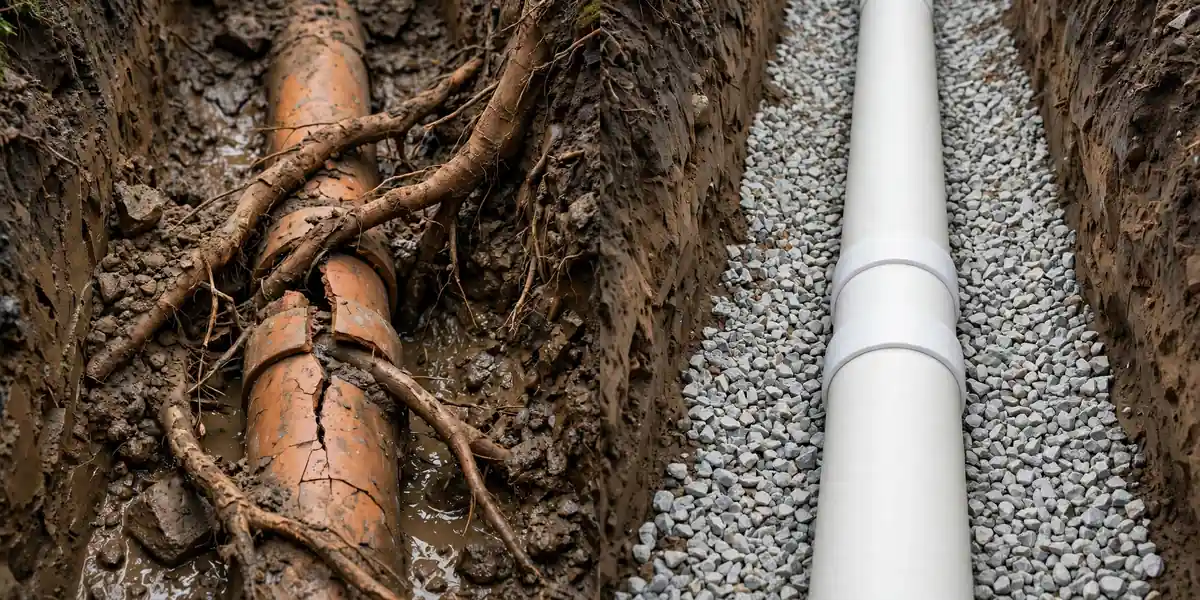
BEFORE AFTER
Broken sewer line before and new pipe after replacement. Real results from First Call Plumbing jobs.
A broken sewer line is every homeowner’s nightmare. Sewage backs up into tubs. The yard smells. Drains gurgle and stall. First Call Plumbing fixes sewer lines across Commerce City, Colorado, with camera-verified diagnoses and flat-rate quotes you approve before we dig.
We answer 24/7. Call (720) 712-9692 any time, day or night.
COMMON CAUSES
What Causes Sewer Line Damage in Commerce City?
Bentonite clay soil is the number one cause. It swells when wet and shrinks when dry.
That constant movement bends, cracks, and separates buried sewer pipes. Add aging clay and cast-iron lines, aggressive tree roots, and ground settling, and you get one of the toughest sewer environments in the Denver metro.
Commerce City sits on expansive bentonite clay. Most homeowners never think about their soil until a sewer line fails.
Here is what happens underground. When it rains or sprinklers run, the clay absorbs water and expands.
It pushes hard against your sewer pipe. When the dry season hits, the clay shrinks and pulls away.
The pipe loses support and sags. This cycle repeats every year.
Older neighborhoods face a second problem. Many homes built in the 1950s through the 1970s still run on their original clay tile or cast-iron laterals.
Those materials are at the end of their service life. Clay tile joints separate.
Cast iron corrodes from the inside out. Tree roots hunt for the moisture leaking from those joints and force their way in.
A root ball the size of a basketball can pack a pipe solid.
Newer subdivisions are not immune. Reunion, Buffalo Highlands, and Fronterra Village sit on the same restless clay. Poor compaction during construction lets soil settle unevenly. A settled section creates a belly in the line where waste collects instead of flowing. Bellies turn into blockages. Blockages turn into backups.
WARNING SIGNS
How Do I Know My Sewer Line Is Broken?
Watch for multiple drains backing up at once, sewage smells in the yard or basement, gurgling toilets, and soggy patches of grass over the sewer path. One slow drain is usually a local clog.
Several failing fixtures at the same time almost always points to the main sewer line.
Here are the warning signs we take seriously:
- Backups in low fixtures. When the main line blocks, wastewater has nowhere to go. It comes back up through the lowest drains first: basement floor drains, ground-floor tubs, and showers.
- Gurgling sounds. Air trapped by a blockage bubbles back through your drains. If your toilet gurgles when the washing machine drains, the main line is struggling.
- Sewage odors. A persistent rotten-egg or sewage smell in the yard, basement, or near drains means wastewater is escaping where it should not.
- Lush green patches. A leaking sewer line fertilizes the grass above it. One suspiciously green, fast-growing strip in an otherwise normal lawn is a classic tell.
- Soggy or sunken ground. Wastewater surfacing from a break saturates the soil. You may see standing water or a dip forming along the pipe’s path to the street.
- Slow drains everywhere. Kitchen, bathrooms, and laundry all draining slowly at once means the problem is downstream of every fixture. That is the main line.
- Foundation cracks or settlement. A long-running leak washes soil away from under slabs and footings. In bentonite country, this accelerates fast.
If you see sewage backing up into your home right now, stop using water and call us immediately. Every flush adds to the backup.
Why Commerce City is different: Our bentonite clay expands up to 10 percent when saturated, then shrinks and cracks in dry spells. That annual heaving snaps rigid clay tile joints and stresses every pipe connection.
Most Denver-metro plumbers treat sewer lines the same everywhere. We design every Commerce City repair around soil movement, because ignoring it guarantees a repeat failure.
OUR PROCESS
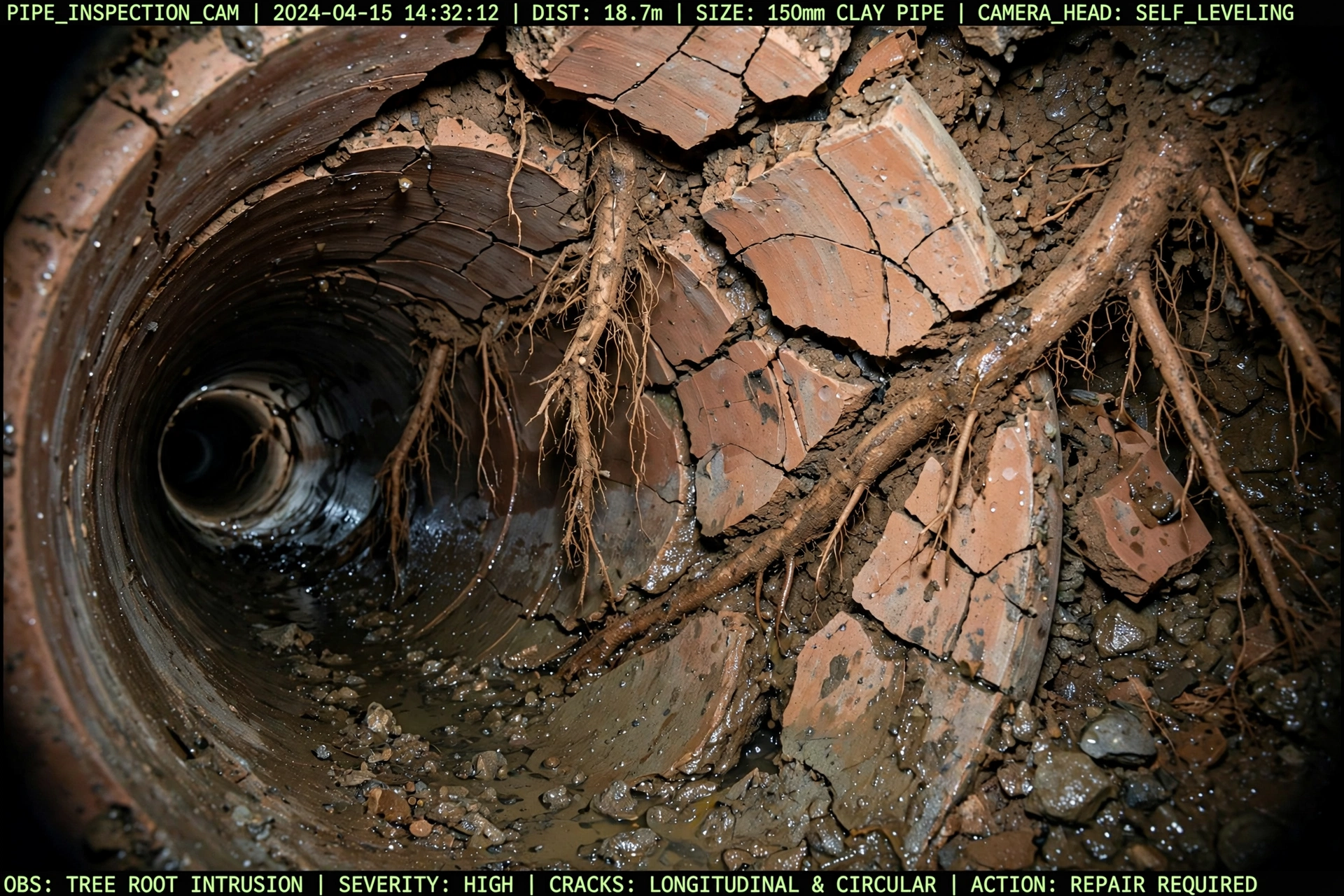
What Happens During Our Camera Inspection?
We never guess about your sewer line. Every diagnosis starts with a camera inspection. You watch the footage with us, see exactly what is wrong, and get a written quote based on evidence, not scare tactics. Here is the process:
- We locate a cleanout. We find your sewer cleanout, usually near the foundation or in the yard. If your home lacks one, we can often run the camera through a pulled toilet or roof vent.
- We push the camera through the line. A waterproof, self-leveling camera head travels the full length of your sewer lateral, from your home to the city main. You watch the live feed on our monitor.
- We record everything. The entire run is recorded with distance markers. You get a copy of the footage, so you can see the problem with your own eyes and get a second opinion if you want one.
- We locate the problem above ground. A locator wand tracks the camera head’s signal from the surface. We mark the exact spot and depth of every break, root intrusion, or belly with paint on your lawn. No digging blind.
- We show you the footage and explain your options. We play back the problem areas, explain what caused them, and lay out repair versus replacement with honest pros and cons for each.
- You get a written flat-rate quote. The price is fixed before work starts. It does not change halfway through the dig. You approve it, or you don’t. No pressure either way.
Some companies quote sewer replacements over the phone or after a five-minute look. We think that is wrong. A camera inspection is the only honest way to diagnose a buried pipe, and we will not sell you a repair we cannot prove you need.
YOUR OPTIONS
Should I Repair or Replace My Sewer Line?
Spot repair wins when the damage is limited to one or two isolated sections and the rest of the line is sound.
Full replacement wins when the pipe is failing in multiple places, made of end-of-life material like clay tile or Orangeburg, or has lost its proper slope. The camera footage makes the call clear.
Here is how the two options compare:
Cost ranges for sewer work vary widely by length, depth, and method. National benchmarks (Angi/HomeAdvisor 2026) put typical spot repairs in the low thousands and full replacements from the mid thousands into five figures for long or deep runs.
Your written quote from us reflects your actual line, not a national average.
Ask about our financing options. Sewer replacement is a big-ticket job, and we keep the payment conversation simple and pressure-free.
NO-DIG SOLUTION
What Is Trenchless Sewer Repair?
Trenchless repair fixes your sewer line through small access points instead of an open trench across your yard.
The two main methods are pipe bursting, which pulls a new pipe through while fracturing the old one, and cured-in-place pipe lining, which installs a resin-hardened sleeve inside the existing pipe. Both save landscaping, driveways, and patios.
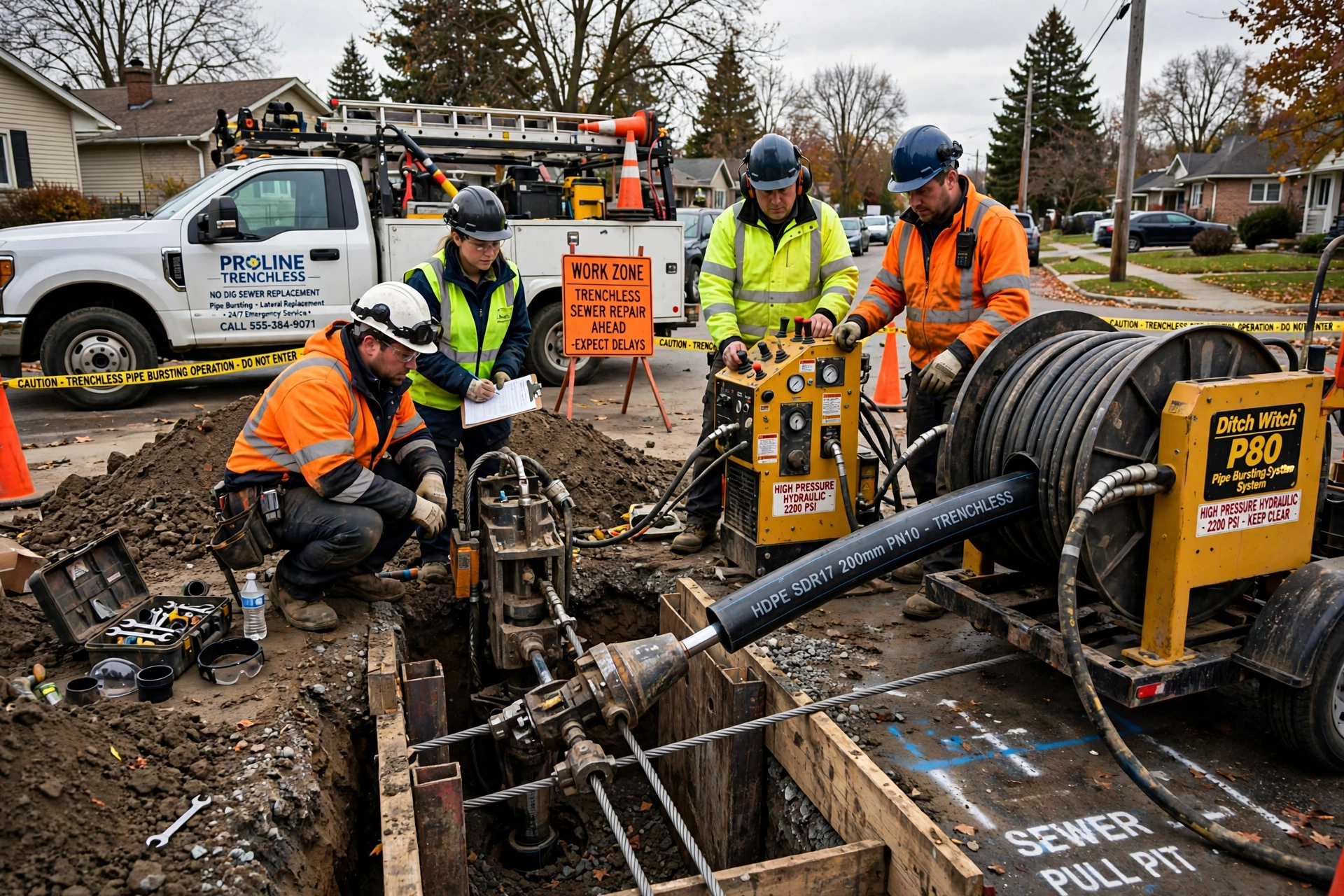
Pipe bursting works best when the old line is too damaged to line but the path is still roughly intact. We dig a small entry pit and an exit pit.
A bursting head travels through the old pipe, breaking it apart, while a brand-new HDPE pipe follows right behind it. You get a completely new line with only two holes in the yard.
Pipe lining (CIPP) works best when the pipe is cracked or root-damaged but still holds its shape. We clean the line, insert a resin-saturated liner, and cure it with heat or UV light.
The result is a smooth, jointless “pipe within a pipe” that resists roots and lasts for decades.
Trenchless is not right for every job. It cannot fix a line that has collapsed flat, lost its slope, or has severe bellies.
Back-pitched sections need traditional excavation to correct the grade. Our camera inspection tells us honestly which method fits your line, and we will tell you when traditional dig is the better answer even though it is more work for us.
PRICING
How Much Does Sewer Line Repair Cost in Commerce City?
Three things drive the price: how long the damaged section is, how deep it sits, and which method fits. A shallow spot repair on a short run costs far less than a deep full replacement under a driveway.
That is why phone quotes for sewer work are meaningless, and why we insist on the camera first.
National benchmarks (Angi/HomeAdvisor 2026) give a rough frame of reference. Minor spot repairs typically land in the low thousands.
Trenchless repairs generally run higher per foot than open-trench work but save thousands in landscape restoration. Full traditional replacements for an average residential lateral often fall in the mid-to-high thousands, climbing into five figures for long runs, deep lines, or difficult access.
Your quote from First Call Plumbing is a flat rate in writing. It covers labor, materials, permits, and restoration of the dig area.
If we hit rock or an unexpected utility, we stop and talk to you before spending another dollar. Ask about our financing options if the timing is tough.
WHY US
Why Homeowners Choose First Call Plumbing
The sewer business has a trust problem. Scare tactics, inflated quotes, and mystery diagnoses are common. We built our process to be the opposite of that.
You see what we see. The camera footage is yours. We record it, hand you a copy, and mark problem spots on your lawn. If another company told you the whole line must go, bring us their quote and our camera will confirm or refute it.
Written flat-rate quotes. No hourly billing on sewer jobs. No “while we’re down there” upsells invented mid-dig. The number on the quote is the number on the invoice.
Local soil expertise. We repair for bentonite movement, not against it. Proper bedding, correct slope, and flexible modern materials mean the repair survives our soil instead of fighting it.
Real 24/7 response. A sewage backup at midnight cannot wait for Monday. A plumber answers our phone around the clock, and emergency dispatch runs nights, weekends, and holidays.
REAL RESULTS
Sewer Line Repair: Before, During & After
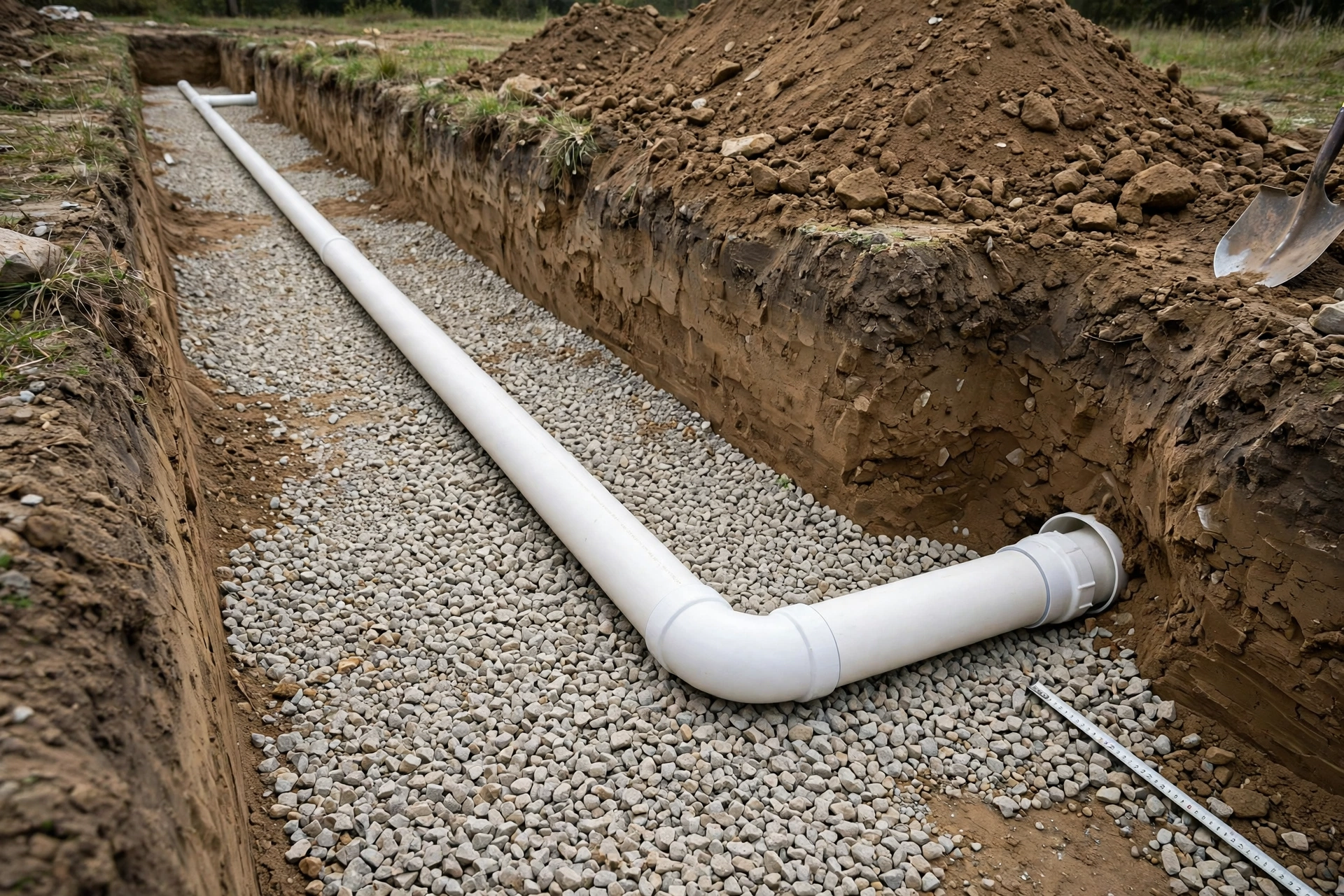
Real sewer jobs from First Call Plumbing. From broken to flowing.
Plumbing Problem Right Now? Don’t Wait.
One call. Upfront price. A plumber at your door fast.
RELATED SERVICES
You May Also Need
Slow drains? Start with drain cleaning
Sewage emergency? Our emergency plumber
REVIEWS
What Commerce City Neighbors Say
★★★★★
“Two other companies told me I needed a full sewer replacement. These guys ran a camera, showed me the actual footage on a screen, and it turned out to be one bad joint. Spot repair, done in a day.”
Dave K.. Derby
QUESTIONS?
Frequently Asked Questions
Most residential replacements take two to five days from first dig to final backfill. Trenchless jobs often finish in one to two days. Timeline depends on the line’s length, depth, soil conditions, and whether concrete or landscaping must be removed and restored.
Traditional replacement opens a trench along the pipe path, so sod and plantings in that strip need restoration. We backfill, compact, and restore the surface, and trenchless methods preserve nearly everything. Your written quote spells out exactly what gets disturbed and how we restore it.
Yes, if the pipe is structurally sound. We cut roots with specialized blades and can apply treatments that slow regrowth. But roots exploit existing cracks and separated joints, so if the pipe is deteriorated, cutting roots is a temporary fix. The camera shows which situation you have.
Standard policies usually exclude sewer line wear and tear but may cover sudden, accidental damage. Many insurers offer an affordable service-line endorsement that does cover it. Check your policy or call your agent before you need it, because coverage cannot be added after a failure.
Keep trees and large shrubs away from the sewer path, never flush wipes (even “flushable” ones), avoid pouring grease down drains, and schedule a camera inspection every few years if your line is older. In bentonite soil, maintaining consistent moisture around the foundation also reduces extreme soil movement.