
FIRST CALL PLUMBING BLOG
How to Keep Your Pipes From Freezing in Commerce City
★ 4.9-star service • Licensed & insured • Upfront pricing
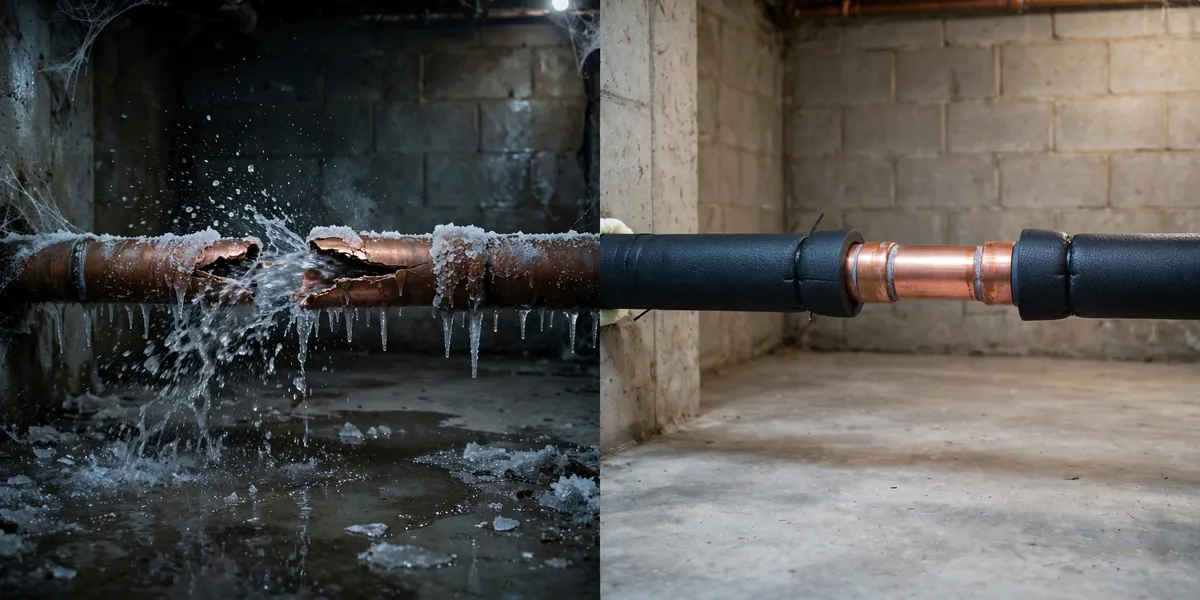
Burst pipe before and after repair.
Every October, Commerce City starts its long slide into winter. The first freeze usually arrives around October 7, and freezing nights keep coming through April. That is six months when the pipes in your crawl space, attic, and garage sit at risk.
A frozen pipe is bad. A burst pipe is far worse: one break can release hundreds of gallons into your home in an hour. The good news is that most freeze damage is preventable.
A single weekend of prep work in October can save you thousands of dollars and a ruined winter.
Which pipes freeze first in a Commerce City home?
Pipes freeze first in unheated spaces. That means crawl spaces, attics, garages, and exterior walls. In Commerce City, the usual victims are hose bibs, laundry lines on outside walls, and any plumbing run through a cold garage.
Walk your home before the first hard freeze and find every exposed run. You cannot protect what you have not found.
Pay special attention to rooms you rarely heat. A spare bathroom over the garage or a laundry room with a thin exterior wall can drop below freezing while the rest of the house feels fine. If a pipe run feels cold to the touch on an October evening, it will freeze in January.
How deep does the frost line go here?
The frost line around Denver sits about 36 inches deep. That is the depth where soil stays above freezing all winter. Water and sewer lines buried above that depth can freeze during a long cold snap. Modern code accounts for this, but older installations sometimes do not.
If your home dates to the 1950s, its original buried lines may sit shallower than modern code requires. That era of Commerce City housing is reaching end of life for galvanized supply lines and clay sewer laterals anyway. A camera inspection can confirm both depth and condition before winter exposes the weakness for you.
How do I insulate exposed pipes?
Foam pipe sleeves are cheap, fast, and effective. Buy pre-slit foam tubes sized to your pipe diameter, snap them over every exposed run, and tape the seams shut. Pay special attention to elbows and valves, where insulation often gaps. For outdoor hose bibs, add an insulated faucet cover.
Total cost for most homes is under fifty dollars and one afternoon. Focus on the runs you found during your walk-through: crawl space, attic, garage, and exterior walls. Insulation does not make pipes freeze-proof, but it buys critical hours during a cold snap.
Those hours are often the difference between a scare and a flood.
Should I drip faucets on bitter nights?
Yes. A slow drip keeps water moving, and moving water resists freezing. On nights forecast below about 15 degrees, let both hot and cold lines drip from the faucet farthest from where water enters your home.
A pencil-thin stream is enough. The extra water cost is pennies compared to a burst pipe.
Dripping matters most for faucets served by pipes in exterior walls or unheated spaces. A faucet on an interior wall above a heated basement rarely needs it. Target your effort where the risk lives.
What about cabinet doors and shutoff valves?
Open cabinet doors under sinks on exterior walls so warm room air reaches the pipes. This simple habit prevents a surprising number of kitchen and bathroom freeze-ups. It costs nothing and takes five seconds on a cold night.
Just as important: know where your main water shutoff is before you need it in a panic. It is usually near where the water line enters your home or at the meter pit. Test it once in October.
If the valve is stuck or corroded, have it serviced before winter. A shutoff you cannot turn is decoration.
What do I do on a minus 10 degree night?
Extreme cold calls for the full playbook at once. Drip faucets, open cabinets, keep the thermostat at 65 or higher even overnight, and never turn the heat off in an unused room that has plumbing. If you will be away, do not set the thermostat below 55 degrees.
A twenty-dollar higher heating bill beats a five-thousand-dollar water damage claim every time. On the coldest nights, check on vulnerable spots once before bed: feel the wall behind the kitchen sink, glance at the garage, and confirm the drips are running.
Your October pipe-freeze checklist
- Walk the house and map every pipe in unheated spaces.
- Snap foam sleeves over exposed runs; tape the seams.
- Fit insulated covers on all outdoor hose bibs.
- Disconnect and drain garden hoses; shut off exterior hose bib valves from inside if you have them.
- Open cabinet doors under sinks on exterior walls on cold nights.
- Find and test your main water shutoff valve.
- Set a phone reminder to drip faucets when the forecast drops below 15 degrees.
- Keep the thermostat at 55 or higher if you leave town, and have someone check the house.
Frequently Asked Questions
Pipes typically start freezing when temperatures hold below 20 degrees for several hours, though uninsulated pipes in windy spots can freeze in the mid 20s. Wind chill numbers do not apply to pipes the way they do to skin, but wind does strip heat from exposed plumbing faster. Duration matters as much as temperature: one cold hour is rarely enough, but a full night below 15 degrees is the danger zone.
No. A pencil-thin drip uses roughly one to three gallons overnight. At local water rates, that costs a few cents. Compare that to the average burst-pipe claim, which runs into the thousands. Dripping is some of the cheapest insurance you will ever buy.
First, open the faucet the frozen pipe serves. Then warm the pipe gradually starting from the faucet end: a hair dryer on low, warm towels, or a space heater kept at a safe distance. Never use an open flame. Once water flows, watch the pipe closely for a day. Freezing can crack a pipe without bursting it, and the leak may appear later as a slow drip inside a wall.
Usually, yes, for sudden and accidental bursts. Most policies cover the water damage from a pipe that bursts without warning. Gradual leaks that went unrepaired are often excluded, and damage from pipes that froze because the heat was off may be disputed. Read your policy now, not after the flood. This is general guidance, not insurance advice.
Have a Plumbing Question? Just Call.
One call. Upfront price. A plumber at your door fast.