
FIRST CALL PLUMBING BLOG
What to Do in the First 10 Minutes After a Pipe Bursts
★ 4.9-star service • Licensed & insured • Upfront pricing
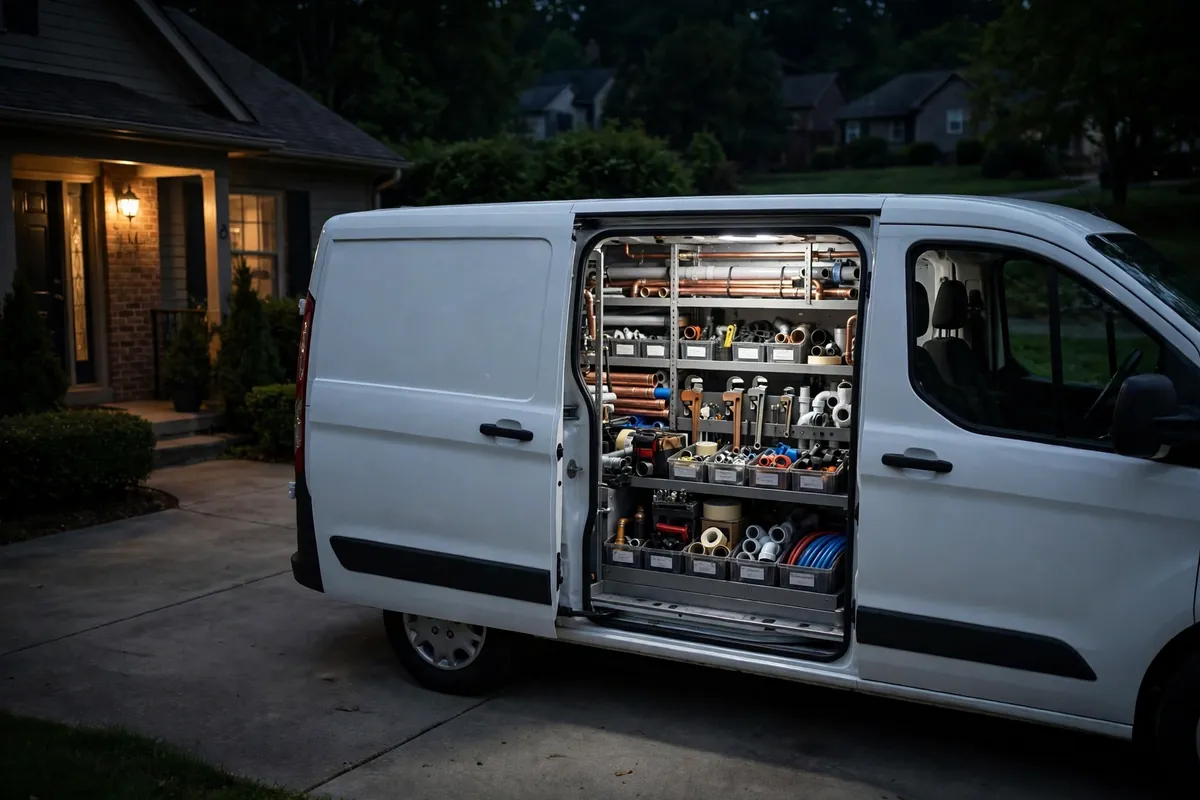
First Call Plumbing emergency van ready for night calls.
A burst pipe is one of the few home emergencies where minutes genuinely matter. A single broken half-inch line can release several gallons per minute. Ten minutes of indecision can mean the difference between a mop-up and a renovation.
This guide gives you a calm, exact sequence. Read it now, while nothing is leaking, and you will act fast when it counts.
Where is my main water shutoff, and how do I close it?
Your main shutoff is usually where the water line enters your home: often in the garage, utility room, basement, or a meter pit near the street. It is typically a round wheel handle or a lever. Turn a wheel clockwise or push a lever perpendicular to the pipe.
Do this first, before anything else, because every other step depends on the water being off.
If you do not know where yours is, find it today. Walk the path now, in daylight, with dry hands. Test the valve once.
Older gate valves seize up from years of sitting; if yours will not budge, call a plumber to replace it before winter. A shutoff you cannot turn is not a shutoff.
Should I turn off the power or gas?
Yes, if water is spreading toward anything electrical. If water is near outlets, the breaker panel, the furnace, or the water heater, go to your breaker box and kill power to the affected area. Do not wade through standing water to reach the panel.
If you cannot reach it safely, get out and call for help.
For the water heater specifically: turn it off. An electric heater with an emptying tank can burn out its elements; a gas heater should be set to pilot or off. These two moves take ninety seconds and prevent a plumbing emergency from becoming an electrical one.
How do I drain the water still in the pipes?
Shutting off the main stops new water, but the pipes are still full. Open the lowest faucet in the house, usually a basement laundry sink or an outdoor hose bib, and let gravity empty the lines. Flush every toilet once to empty tanks and bowls.
Open a few upstairs faucets to let air in so the water drains faster.
This drain-down does two things. It relieves pressure on the broken section, which slows any remaining leak. And it empties the system so a plumber can cut and repair without fighting a pressurized line. Five minutes of draining saves real time on the repair.
What should I document for insurance?
Before you move anything, photograph and video everything. Capture the burst location, the water spread, damaged belongings, and the shutoff valve position. Narrate the video: state the date, time, and what you found. This record is the backbone of any claim.
Do not throw away damaged items yet. Insurers may want to see them. Move valuables and electronics to dry ground, start mopping and toweling to limit damage, but keep the ruined carpet, the soaked boxes, the damaged drywall pieces until your adjuster has seen them or told you otherwise.
Mitigating damage is your duty; destroying evidence is not.
What should I NOT do after a pipe bursts?
Do not wait until morning. Water damage compounds by the hour: drywall wicks it upward, subfloors swell, and mold can start within a day or two in a warm house. An emergency call now is cheaper than a mold remediation later.
Do not try to solder or glue the break yourself while the system is wet. Pipe repair needs dry, clean surfaces and the right fittings. A rushed patch usually fails and wastes the plumber’s time.
Do not use electrical appliances in wet areas. And do not assume the visible break is the only damage: freezing often stresses multiple joints, so ask your plumber to check the whole run.
What happens after the plumber arrives?
Once the immediate crisis is handled, the plumber will cut out the damaged section and replace it with new pipe and proper fittings. If freezing caused the burst, expect a conversation about prevention: insulation on that run, heat tape in extreme spots, or rerouting a vulnerable line. A good plumber treats the burst as a symptom and looks for the cause.
After the repair, keep an eye on your water bill for the next two cycles. A spike can reveal a second leak you have not found yet, especially if the freeze stressed multiple joints. And call your insurance company within 24 hours if you plan to file.
Most policies require prompt notice, and your photos and video from the first ten minutes will make that call much easier.
Your 10-minute action timeline
| Minute | Action |
|---|---|
| 0 to 1 | Stay calm. Go straight to the main water shutoff and close it. |
| 1 to 2 | If water is near anything electrical, kill power to the area at the breaker box. Turn off the water heater. |
| 2 to 4 | Open the lowest faucet and flush toilets to drain the lines. Open upstairs faucets to vent. |
| 4 to 6 | Photograph and video all damage before moving anything. Narrate date and time. |
| 6 to 8 | Move valuables and electronics to dry ground. Start mopping and toweling. |
| 8 to 10 | Call a plumber. Describe the break location and what you have done so far. |
Frequently Asked Questions
A lot. A broken half-inch supply line at normal household pressure can release several gallons per minute. In ten minutes, that is dozens of gallons: enough to soak carpet, warp baseboards, and seep into subfloor. This is why the shutoff comes first, before photos, before mopping, before anything.
Most policies cover sudden and accidental bursts and the resulting water damage. Gradual leaks and damage from neglected maintenance are commonly excluded. Coverage also varies if the home was unheated or vacant. Document everything, mitigate further damage, and call your insurer promptly. This is general guidance, not insurance advice.
A repair clamp can be a reasonable temporary stopgap on a clean break, and only after the line is drained and dry. Epoxy putties rarely hold under household pressure for long. Treat any DIY fix as a bridge to a proper repair, not the repair itself. A plumber should replace the damaged section with proper fittings.
Insulate exposed runs, drip faucets on bitter nights, open cabinets on exterior walls, and keep the heat at 55 or above when away. In Commerce City, freeze season runs October through April, so this is a six-month habit, not a one-night chore. If your home has 1950s-era galvanized lines, have them inspected: old pipe bursts more easily than new.
Have a Plumbing Question? Just Call.
One call. Upfront price. A plumber at your door fast.